















Welcome to another Blue Banana piercing care guide, where we go over all of your piercing questions and piercing care FAQs. In today’s blog, we’re talking about anatomy. What is piercing anatomy, and how does it affect you? Is there anything you need to know before getting pierced? When you come to get pierced at a Blue Banana studio, our trained piercers will check that your body anatomy is okay for the piercing that you’d like. If they don’t think that your anatomy is compatible with the piercing, they may turn you away. It’s important to know what they’re expecting ahead of time, so that you don’t make an unnecessary journey.
Anatomy: Why Can’t I Get Pierced?
Featured Images

Blue Banana Titanium Spider Threadless Labret (Rose Pink)
Blue Banana Titanium Spider Threadless Labret (Rose Pink)

Blue Banana Polished Titanium Curved Marquise Threadless Labret
Blue Banana Polished Titanium Curved Marquise Threadless Labret

Blue Banana Surgical Steel Zircon Cross Navel Bar (Crystal)
Blue Banana Surgical Steel Zircon Cross Navel Bar (Crystal)

Tragus Piercing | 14k White Gold Star Threadless Top
Tragus Piercing | 14k White Gold Star Threadless Top

Central Eyebrow Piercing | Polished Titanium Curved Barbells

Navel Piercing | Polished Titanium Double Jewelled Navel Bar
Navel Piercing | Polished Titanium Double Jewelled Navel Bar

Double Nostril Piercing | 14K Gold Hinged Segment Rings
Double Nostril Piercing | 14K Gold Hinged Segment Rings

Lobe Piercing | Plasma Gold Labret

Labret Piercing | Surgical Steel Silver Labret

Daith Piercing | Surgical Steel Daith Heart (Black)
Daith Piercing | Surgical Steel Daith Heart (Black)

Daith Piercing | 14K Gold Hinged Segment Ring

Navel Piercing | Plasma Gold Double Jewelled Navel Bar (Zircon)
Navel Piercing | Plasma Gold Double Jewelled Navel Bar (Zircon)

Nostril Piercing | 14K Gold Hinged Segment Ring
Nostril Piercing | 14K Gold Hinged Segment Ring

Rook Piercing | Opal Threadless Top & Curved Bar
Rook Piercing | Opal Threadless Top & Curved Bar

Gill (Surface Piercing) | Polished Titanium Staple Bar & Jewelled Balls
Gill (Surface Piercing) | Polished Titanium Staple Bar & Jewelled Balls

Helix Piercings | Real Gold 14K Rings
Helix Piercings | Real Gold 14K Rings

Double Helix Piercing | Threadless Claw Tops
Double Helix Piercing | Threadless Claw Tops

Septum Piercing | Polished Titanium Snake Segment Ring
Septum Piercing | Polished Titanium Snake Segment Ring

Double Nostril Piercing | Gold Segment Ring & Cherry Threadless Top
Double Nostril Piercing | Gold Segment Ring & Cherry Threadless Top
Products Used

Spider Bites Piercing | Polished Titanium Labret

Nape Piercing | Polished Titanium Staple Bar
Nape Piercing | Polished Titanium Staple Bar

Chest Surface Piercing | Titanium Staple Bar & Top
Chest Surface Piercing | Titanium Staple Bar & Top

Labret Piercing | Surgical Steel Segment Ring

Tongue Piercing | Polished Titanium Barbell (Silver)
Tongue Piercing | Polished Titanium Barbell (Silver)

Septum Piercing | Plasma Gold Circular Barbell

Anti-Eyebrow Piercing | Polished Titanium Staple Bar
Anti-Eyebrow Piercing | Polished Titanium Staple Bar

Ashley Piercing | Polished Titanium Labret (Silver)

Industrial Piercing | Purple Titanium Barbell
Industrial Piercing | Purple Titanium Barbell

Nostril Piercing | Lab Diamond Threadless Top
Nostril Piercing | Lab Diamond Threadless Top

Double Helix Piercing | Plasma Gold Threadless Labrets
Double Helix Piercing | Plasma Gold Threadless Labrets
Products Used

Curated Ear Piercings | Lab Diamond Studs
Curated Ear Piercings | Lab Diamond Studs
Products Used

Tongue Piercing | Purple Titanium Barbell
Tongue Piercing | Purple Titanium Barbell

Vertical Labret | Polished Titanium Curved Barbell

Daith Piercing | Crystal Wreath Segment Ring
Daith Piercing | Crystal Wreath Segment Ring

Hidden Helix Piercing | Gold Double Chain Threadless Labret

Rook Piercing | Steel Curved Barbell (Crystal)
Rook Piercing | Steel Curved Barbell (Crystal)

Vertical Helix Piercing | 14k Gold Threadless Top

Eyebrow Piercing | Titanium Curved Barbell

Helix Piercing | Skeleton Threadless Top
Helix Piercing | Skeleton Threadless Top
What are anatomy checks?
Anatomy checks are performed by the piercer at your appointment to ensure that your anatomy is compatible with the type of piercing you want. Don’t worry- it’s nothing scary! Your piercer will simply take a look at the area you want to pierce, and they may ask you to stretch or sit to see how the piercing could move.
Why are anatomy checks important?
If a piercing is wrong for your anatomy, your body could reject it. We want to avoid this as much as possible, so we don’t pierce anyone whose anatomy is incompatible with the piercing.
What is piercing rejection?
Piercing rejection happens when your body cannot heal your piercing, and instead expels it. This can be painful and can lead to infection or even scarring.
Common Problems with Piercing Anatomy:
-
Navel: Navel piercings are the ones that get turned away due to anatomy the most often. That’s because your piercer will need enough flesh to pierce through (Not skin; skin can be ripped through). If your belly button doesn’t have enough flesh surrounding it, we cannot pierce you. The anatomy is checked standing up and sitting down. If the belly button disappears completely when sitting down, we might say no, as the piercing will put too much pressure on your navel. Less space also means more moisture, which could lead to more infection. The piercer may also ask you to lie down- if the skin stretches out too much, the piercing could tear the skin or lead to rejection. Belly buttons that are wide/deep are also better, as they can hold jewellery better than shallow/narrow ones. The size of the belly button is considered by the piercer when picking out piercing jewellery.
-
Tongue: When it comes to tongue piercings, your piercer will need enough area to pierce, so tongues with ties or webs may not be considered. We also check vein placement, as we can’t pierce through any major veins to avoid blood loss and infection. You can try to circumvent this by doing a bar on either side of the vein instead of a stud through the middle, but this is up to your piercer’s discretion.
-
Mouth: Piercings like a smiley also rely on veins on the inside of the mouth; we only pierce if there’s enough skin and no risk of puncturing a vein. Your piercer may ask to look inside your mouth, and could request that you move your mouth around to show how the skin stretches.
-
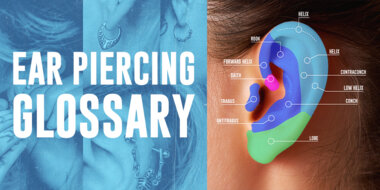
Cartilage: Ear anatomy is another big topic- cartilage piercings tend to be the ones turned away most frequently, as they require a nice, flat area of cartilage. Industrial and scaffold piercings, for example, need a long bar; the ear needs to be able to support the jewellery, so we check that there is enough cartilage. Otherwise, the piercing could put too much stress on your ear and not heal correctly. The same goes for conch and helix piercings: if there isn’t enough cartilage space, we can’t pierce. Pressure on the back of cartilage piercings will lead to migration or rejection.
-
Bridge: Just as with the other body parts, we need enough flesh to pierce through. To check, your piercer will hold the bridge between their fingers and ask the customer to raise their eyebrows. If the bridge stretches too much, we can’t pierce, as the jewellery could migrate or be rejected.
- Surface: Again, we’ll check that there’s enough flesh. Surface piercings need to sit flat on the surface of the skin, without too much stretching or moving.
Got some questions about your anatomy? With handy online booking or spontaneous walk-in slots available, our piercing studios are always open for you! Come on in for a consultation with one of our talented piercers, who can talk to you about your dream piercings and go over any anatomy issues. Officially trained and licensed, our piercers are friendly and experienced and will answer absolutely any questions that you have, so that you can go into your piercing appointment without any anxiety! Book your consultation here.